


WHEN START-UPS OUTGROW LUCK: WHY RISK READINESS IS BECOMING INDIA’S QUIET ADVANTAGE
As India’s start-up ecosystem accelerates, scale is no longer defined only by speed or innovation. Increasingly, it is shaped by how well young businesses prepare for uncertainty—a reality that ICICI Lombard General Insurance placed firmly at the centre of conversation through its recent Startup Shield initiative
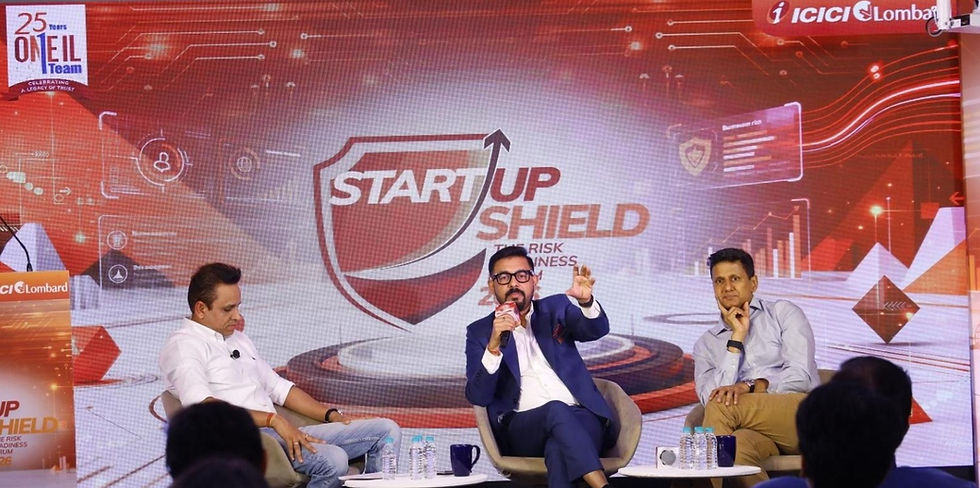
India’s start-up ecosystem is no longer defined only by speed and innovation. It is increasingly shaped by questions of resilience: how young companies protect themselves against cyber breaches, regulatory shocks, people-related liabilities, and operational disruptions that can derail growth overnight. Against this backdrop, ICICI Lombard General Insurance recently convened Startup Shield – The Risk Readiness, an initiative that reframed insurance and risk planning not as defensive tools, but as strategic enablers.
The closed-door forum brought together more than a hundred participants—founders, venture capital and private equity investors, CXOs, and risk professionals—for candid conversations on what it truly takes to build investor-ready businesses. Rather than prescribing solutions, the discussions focused on lived realities: how a single cyber incident can unsettle boardrooms, or how unaddressed people risks can complicate funding rounds and partnerships.
What emerged was a shared recognition that risk is no longer something to be dealt with “later”. As start-ups move from early traction to rapid scaling, the absence of structured risk planning can quietly erode confidence—long before balance sheets reveal stress.
From avoidance to anticipation
A defining thread through Startup Shield was the shift from risk avoidance to risk anticipation. Participants explored how different stages of growth bring distinct vulnerabilities, and how early planning can strengthen governance, protect leadership, and reduce friction during due diligence.
Sessions addressed areas founders often postpone until a crisis forces action: cyber and data security, employee health and wellness, professional indemnity, directors and officers (D&O) liability, asset protection, and business interruption. These were not theoretical conversations. Experts from ICICI Lombard shared case studies showing how timely insurance cover and structured risk frameworks had helped start-ups recover from legal, financial, and operational shocks with minimal disruption.
The presence of investors added a sharper lens. For them, risk readiness is no longer peripheral—it increasingly informs valuation, board confidence, and long-term partnership decisions. In that sense, preparedness is becoming a signal of maturity, not merely compliance.
Risk as a growth signal
One of the more telling insights from the discussions was how risk planning is evolving into a credibility marker. As start-ups seek enterprise clients, global markets, and complex supply chains, stakeholders expect clarity on how risks are identified and managed.
Addressing the audience, Sandeep Goradia, Chief Corporate, International & Bancassurance at ICICI Lombard, underscored this shift.
“India today is the third-largest startup ecosystem in the world, with over 1.8 lakh DPIIT-recognised startups driving innovation, employment, and global competitiveness. As Indian startups build ambitious, high-growth businesses, their exposure to unforeseen risks is also rising. Through Startup Shield, we aim to shift the conversation from reacting to risk to anticipating it—helping founders protect their people, strengthen their businesses, and build lasting stakeholder trust.”
His remarks resonated with a room increasingly aware that resilience and responsibility are now inseparable from scale. Risk readiness, the discussions suggested, is less about guarding against worst-case scenarios and more about enabling confident decision-making under uncertainty.
Building for uncertainty, not just growth
What set Startup Shield apart was its tone. It avoided the language of cautionary warnings and instead positioned preparedness as a form of quiet advantage. By embedding risk thinking early, start-ups can focus on growth without being derailed by surprises that could have been mitigated.
For ICICI Lombard, the initiative sits within a broader engagement with India’s entrepreneurial ecosystem—one that recognises the role insurers can play beyond policy issuance. The ambition is to act as long-term risk partners, supporting founders as their businesses evolve in complexity and scale.
As India’s start-ups mature, the narrative is shifting. The question is no longer whether risk exists—it always has—but whether founders are ready to confront it with intent. In an ecosystem built on speed, those who pause to plan may find themselves better equipped not just to grow, but to endure.


